Besties Chinese New Year Celebration
 juegos.org.es
Sign in to keep recently played games, favorites and your player profile available on this site.
Popular Games
Last Played
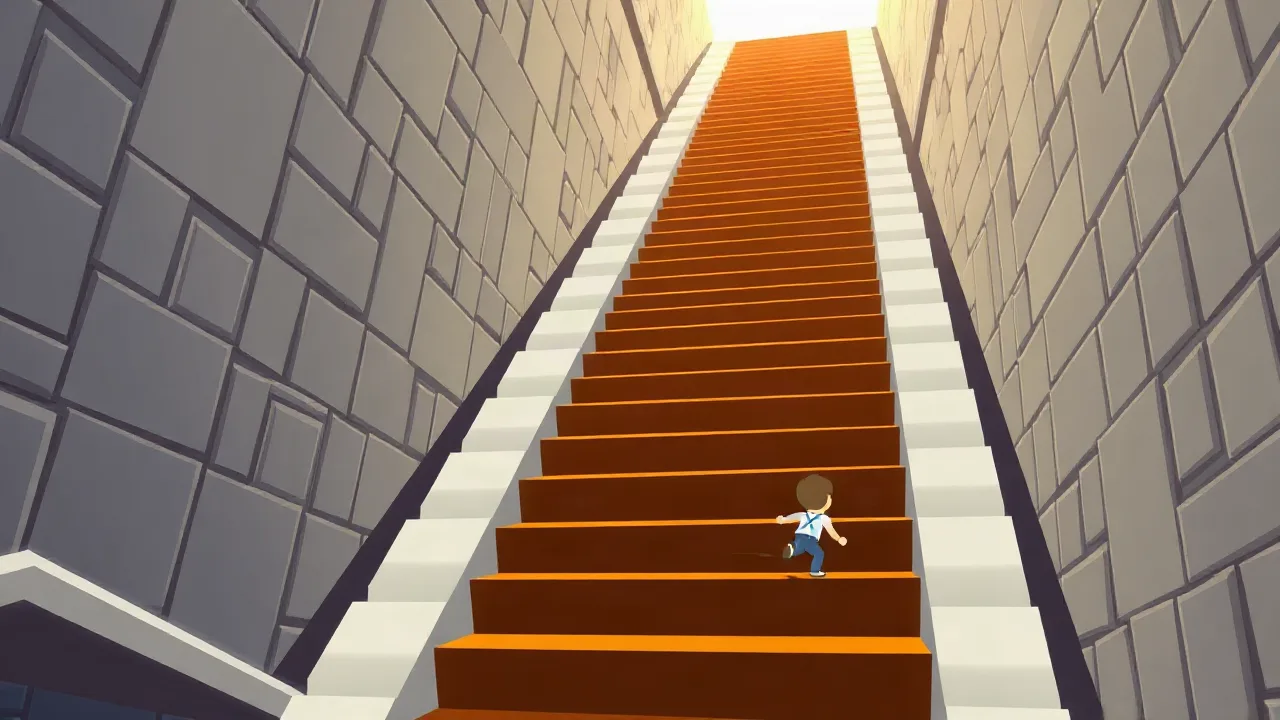
Stairway Sprint is a fast-paced arcade challenge that tests your reflexes and timing as you ascend an endless series of steps. Players must navigate the rising architecture, avoiding obstacles and collecting rewards while maintaining momentum. This page provides a comprehensive look at the mechanics, strategies, and features of this WebGL title, helping you understand how to maximize your score. Whether you are looking to master the controls or simply want to jump in, this guide covers everything you need to know about the experience.
The fundamental objective is straightforward yet demanding: climb as high as possible without falling. The game utilizes a vertical scrolling mechanic where the environment constantly moves downward, forcing the player to move upward to survive. You control a character that must jump between platforms or steps, often requiring split-second decisions to avoid gaps or barriers. As you progress, the speed of the ascent typically increases, raising the difficulty and requiring sharper reflexes. The core loop revolves around the rhythm of movement, rewarding precision over recklessness.
Built using the Unity3D engine and rendered via WebGL, the game offers smooth performance directly within modern web browsers. This technical foundation ensures that the visual elements are crisp and the animations remain fluid even during high-speed sequences. The aesthetic often leans towards clean, vibrant colors to ensure that obstacles and platforms are easily distinguishable from the background. This clarity is essential in an arcade setting where visual noise can lead to errors. The WebGL integration means there is no need for downloads or plugins, allowing for instant accessibility.
| Feature | Details |
|---|---|
| Primary Category | Arcade Games |
| Platform Technology | Unity3D / WebGL |
| Session Pace | Fast and continuous |
| Primary Input | Keyboard or Mouse Click |
| Accessibility | Browser-based, no download |
Success in this title depends heavily on muscle memory. While specific control schemes can vary slightly, the standard input involves using the spacebar, mouse click, or tap to initiate a jump. The timing of this input is critical; jumping too early might leave you short of the next platform, while jumping too late can result in falling off the edge. Advanced players often learn to "buffer" their inputs, preparing for the next jump before the character has even landed. Consistent practice with the input method of your choice is the only way to develop the necessary rhythm for high-level play.
To achieve a competitive score, you must balance speed with caution. While rushing might seem like the best way to cover distance, it often leads to fatal mistakes. A steady rhythm is usually more effective than erratic bursts of speed. Pay attention to the patterns in the level generation; while the climb is endless, the placement of steps often follows predictable sequences that can be memorized. Additionally, focusing on the character's position relative to the center of the screen can help maintain spatial awareness. Collecting any available power-ups or bonuses is also vital, as these can provide temporary advantages that extend your run.
As a WebGL title, this game is designed to run on a wide variety of devices, from desktop computers to mobile tablets. However, performance can depend on the hardware capabilities of your device. For the smoothest experience, it is recommended to use an up-to-date browser like Chrome, Firefox, or Safari. Closing unnecessary background tabs can also free up system resources, ensuring that the frame rate remains stable. If you experience any stuttering, lowering the visual quality settings in the game menu can often resolve performance issues without significantly impacting gameplay.
New players often make the mistake of panicking when the speed increases. This usually results in mistimed jumps and premature game overs. Another common error is looking too far ahead rather than focusing on the immediate platform. While planning is good, reacting to the current obstacle is more important. Finally, ignoring the audio cues can be detrimental; the sound effects often provide subtle hints about incoming obstacles or rhythm changes. Staying calm and maintaining focus are the most important tools in your arsenal.
This game is an excellent choice for players who enjoy arcade-style challenges that are easy to learn but difficult to master. It offers a satisfying loop of "just one more try," making it perfect for filling short breaks or competing with friends for the highest score. The combination of simple controls and deep mechanical skill creates a compelling experience that keeps players engaged. If you are ready to test your reflexes and see how high you can climb, you can start playing Stairway Sprint right now.
Q: Is the game difficult to learn?
A: The basic controls are very simple, usually involving just one button or key. However, mastering the timing and speed required for high scores takes practice.
Q: Do I need to download anything to play?
A: No, the game runs directly in your web browser using WebGL technology. There is no installation required.
Q: Can I play on my mobile device?
A: Yes, the game is compatible with most modern mobile browsers and supports touch controls.
Q: What is the goal of the game?
A: The primary goal is to climb as high as possible on the endless staircase while avoiding obstacles and falling off the screen.